
Precision-inverter technology
Variable-speed compressors match instantaneous heating and cooling loads so zones avoid short-cycling on mild shoulder seasons.
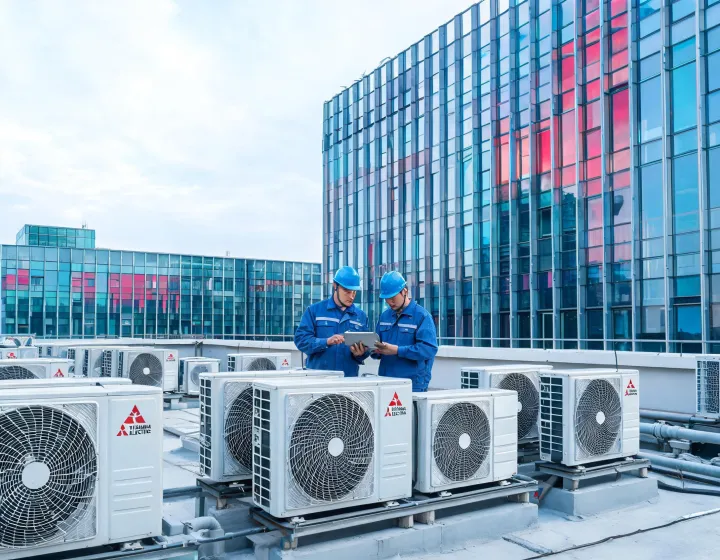
Engineered for a Smarter Climate
Specify ductless heat pumps, Hyper-Heating H2i cold-climate platforms, and City Multi VRF with documented SEER2 pathways, refrigerant charge envelopes, and energy-optimized performance for multi-zone buildings.
System Advantages
Each advantage maps to a measurable HVAC decision—capacity modulation, cold-climate heating, zoning flexibility, or commissioning clarity—rather than generic brand slogans.
Variable-speed compressors match instantaneous heating and cooling loads so zones avoid short-cycling on mild shoulder seasons.
Cold-climate heat pumps sustain rated heating output at design temperatures that force many air-source units into resistance backup.
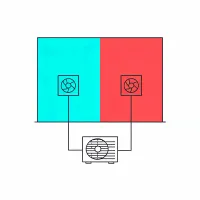
Simultaneous heating and cooling pathways let mixed-use cores rebalance without separate hydronic loops for every tenant stack.
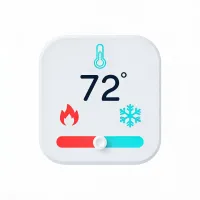
Thermostat and central controllers expose setback schedules, fault codes, and energy trend data facility teams can audit weekly.

Published SEER2 and HSPF2 pathways help procurement managers compare lifecycle operating cost against baseline rooftop packages.

Dealer and Diamond Contractor networks across 150 countries shorten parts lead times and commissioning support for multi-site rollouts.
Technical Parameters
Switch categories to review the values that typically appear in Division 23 submittals for ductless, Hyper-Heating, and VRF programs.
| Parameter | Typical range / note |
|---|---|
| Cooling capacity | 9,000–36,000 BTU/h single-zone; multi-zone outdoor units scale by attached indoor heads |
| Heating capacity | Matched inverter heating tables with capacity retention curves published by outdoor ambient |
| SEER2 / HSPF2 | High-efficiency ductless constructions sized for ENERGY STAR Partner pathways where applicable |
| Sound pressure | Indoor cassette and wall units typically 19–32 dB(A) on low fan for quiet hospitality zones |
| Line-set length | Manufacturer-limited refrigerant piping lengths with oil return and charge adjustment notes |
| Parameter | Typical range / note |
|---|---|
| Design ambient heating | Sustained heating capacity at low outdoor temperatures without defaulting to electric strip heat |
| Defrost strategy | Demand-based defrost cycles that protect COP during prolonged frost events |
| Air permeability impact | Envelope tightness assumptions required so infiltration loads do not erase H2i gains |
| Thermal bridging note | Outdoor unit mounting and refrigerant penetrations detailed to limit envelope heat loss |
| Backup coordination | Optional auxiliary heat staged only after documented capacity thresholds |
| Parameter | Typical range / note |
|---|---|
| System topology | Heat pump or heat recovery City Multi configurations for simultaneous zone demands |
| Connected indoor ratio | Diversity factors allow attached capacity above outdoor nameplate within manufacturer limits |
| Piping network | Branch controllers and header kits sized for pressure drop and oil return on tall risers |
| Fire resistance interfaces | Shaft and penetration details coordinated with fire resistance rating of rated assemblies |
| Commissioning points | Addressing, leak check, vacuum, charge, and control network verification checklist |
| Parameter | Typical range / note |
|---|---|
| Thermostat interfaces | Wired and wireless controllers with schedule, setback, and lockout for public spaces |
| BMS / BACnet options | Gateway pathways for central plant dashboards and fault aggregation |
| VOC / filtration notes | Indoor air pathways coordinated with MERV filtration and VOC emissions limits for occupied zones |
| Moisture control | Latent capacity tables support humidity setpoints in healthcare and museum spaces |
| STC-adjacent planning | Equipment placement and ductless wall openings reviewed against acoustic STC rating targets |
Where Systems Deploy

Floor-by-floor VRF and ductless zones for tenant fit-outs with staggered occupancy schedules.

Unitized heat pumps that simplify metering while meeting cold-climate heating design days.

Quiet indoor units and precise setpoints for exam rooms with infection-control ventilation overlays.

Guest-room ductless packages with low sound pressure and rapid recovery after door openings.

Classroom zoning that tracks variable occupancy without overcooling empty wings overnight.

Process-adjacent comfort zones with refrigerant pathway reviews near production envelopes.

High glass-load spaces where inverter modulation tracks solar gains through the trading day.

Redundant indoor heads and control networks for trading floors and 24/7 operations centers.
Credentials




Scale at a Glance
 1921
Founded
1921
Founded
 145,000+
Employees worldwide
145,000+
Employees worldwide
 150
Countries served
150
Countries served
 2.5M+
Annual system installs
2.5M+
Annual system installs
Share load calculations, design temperatures, and zoning intent—our team will map the right Mitsubishi Electric heat pump or VRF pathway.